Introduction
Choosing the right projector for office use is essential for delivering professional presentations, conducting meetings, and improving collaboration. With so many options available in the market, selecting the perfect projector can be confusing.
Whether you run a small business, corporate office, or conference room setup, this guide will help you understand everything you need to consider before buying a projector.
1. Understand Your Office Requirements
Before purchasing a projector, identify how you will use it:
- Presentations (PowerPoint, PDFs)
- Video conferencing
- Training sessions
- Large conference meetings
Key Questions:
- Room size (small, medium, large)?
- Lighting conditions (dark or bright room)?
- Number of viewers?
Understanding these factors will help narrow down your options.
2. Brightness (Lumens) Matters Most
Brightness is one of the most important factors when choosing an office projector.
Recommended Lumens:
- Small meeting room: 2000–3000 lumens
- Medium room: 3000–4000 lumens
- Large conference hall: 4000+ lumens
If your office has ambient light, always go for higher brightness to ensure clear visibility.
3. Choose the Right Resolution
Resolution determines the clarity of your content.
Common Resolutions:
- SVGA (800×600): Basic use (not recommended)
- XGA (1024×768): Standard office presentations
- WXGA (1280×800): Best for laptops and widescreen
- Full HD (1920×1080): Ideal for videos and high-quality presentations
- 4K: Premium offices and boardrooms
👉 For most offices, WXGA or Full HD is the best choice.
4. Projector Types: Which One is Best?
1. DLP Projectors
- Sharp images
- Low maintenance
- Good for presentations
2. LCD Projectors
- Better color accuracy
- Ideal for detailed visuals
3. LED Projectors
- Energy efficient
- Longer lifespan
- Portable
4. Laser Projectors
- High brightness
- Long-lasting
- Best for corporate environments
👉 For office use, LCD or Laser projectors are highly recommended.
5. Throw Distance & Screen Size
Throw distance determines how far the projector needs to be from the screen.
Types:
- Short Throw: Small rooms
- Ultra Short Throw: Limited space
- Long Throw: Large halls
If your office space is small, go for short throw projectors.
6. Connectivity Options
Modern offices require flexible connectivity.
Must-have Ports:
- HDMI
- USB
- VGA
- Wi-Fi / Wireless casting
- Bluetooth (optional)
Wireless projectors are ideal for clutter-free meeting rooms.
7. Audio and Built-in Speakers
Most projectors come with built-in speakers, but they are not always powerful.
👉 For better sound:
- Use external speakers
- Or choose projectors with 10W+ audio output
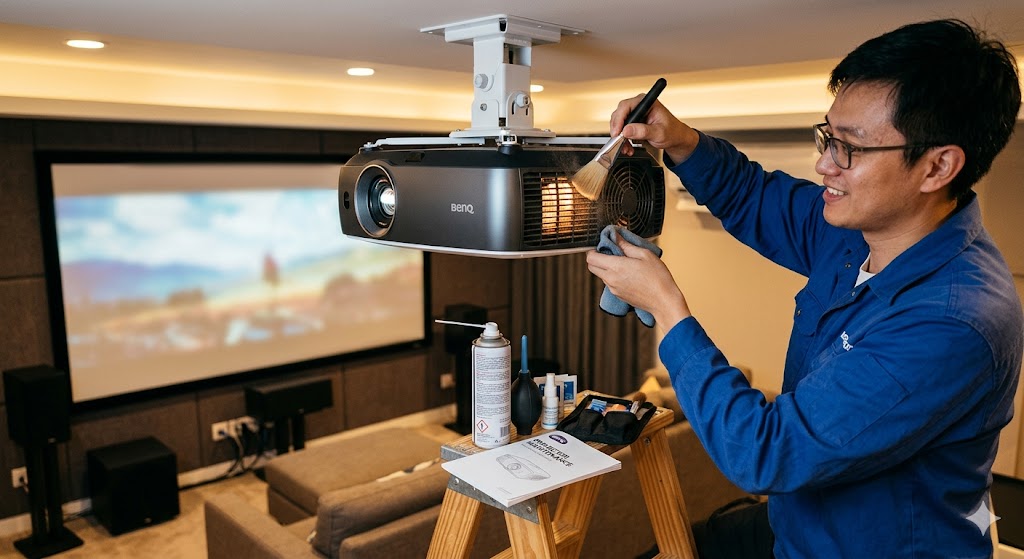
8. Lamp Life & Maintenance
Projector maintenance cost is often overlooked.
Average Lamp Life:
- Standard: 3,000–5,000 hours
- LED/Laser: 20,000+ hours
👉 Choose long-life projectors to reduce maintenance costs.
9. Budget Consideration
Projector prices vary depending on features:
Price Range in India:
- ₹25,000 – ₹50,000: Basic office use
- ₹50,000 – ₹1,00,000: Mid-range professional use
- ₹1,00,000+: High-end corporate setups
Always balance price vs features rather than going for the cheapest option.
10. Portability vs Fixed Installation
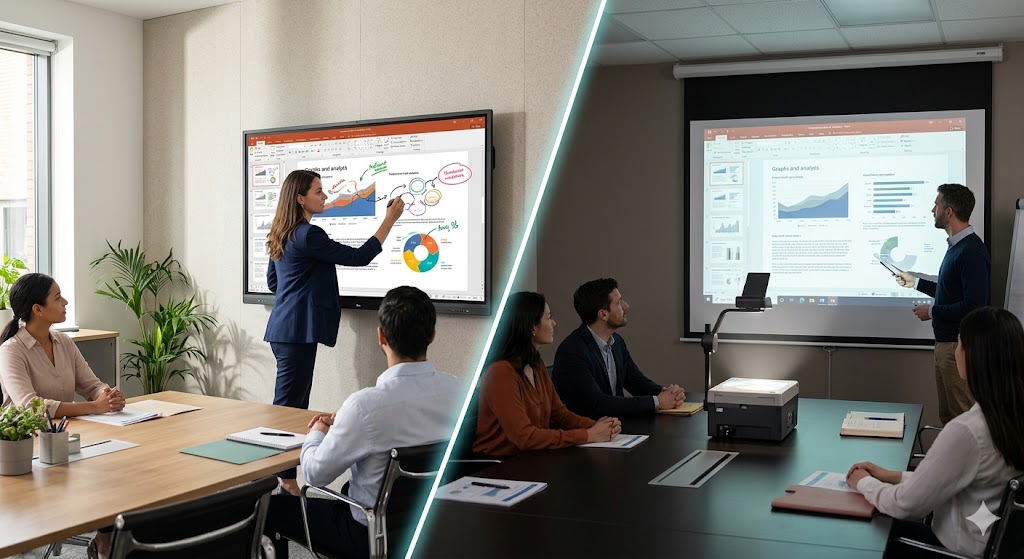
- Portable Projectors: Easy to move, ideal for small teams
- Ceiling Mounted Projectors: Best for conference rooms
Choose based on your office setup.
Bonus Tip: Go for Trusted Brands & Support
Always choose a reliable supplier who offers:
- Installation support
- Warranty
- After-sales service
This ensures long-term performance and peace of mind.
Conclusion
Choosing the right projector for office use depends on your room size, brightness requirements, resolution, and budget. By understanding these key factors, you can invest in a projector that enhances productivity and delivers professional results.